Most commercial restrooms in New York were designed to pass inspection, not to actually work for everyone who walks — or rolls — through the door. That gap is the subject of a new report from ASI (American Specialties, Inc.), one of the largest manufacturers of toilet partitions and washroom accessories in the world. The Accessibility Gap Report makes a simple case: minimum ADA compliant restroom design is the floor, not the finish line.
If you manage a building, run a school, or spec restrooms for a living, the report is worth ten minutes of your time. Here’s what it says, why it matters in New York and the tri-state area, and what it means the next time you order toilet partitions, grab bars, or changing stations.
The numbers behind the report
Nearly 29% of U.S. adults live with a disability, according to the data ASI cites — including 12.2% with mobility challenges. Among adults over 75, the disability rate is around 45%. These aren’t edge cases. In a busy Manhattan office building, a Queens school, or a Long Island medical office, a meaningful share of the people using your restrooms every day benefit from accessible design.
The report’s most sobering finding involves caregivers. Because the federal ADA Standards still have no requirement for adult changing tables, caregivers for people who need toileting assistance improvise. In the research ASI cites, every caregiver interviewed had changed someone in a car or parking lot, and most had used a public restroom floor. Many were injured doing it.
That’s not a comfort issue. It’s a safety issue — and increasingly, a code issue.
Codes are catching up
The 2024 International Building Code now requires at least one adult changing station in certain assembly and mercantile buildings, larger post-secondary educational buildings, school assembly spaces, and highway rest stops, based on fixture counts. States are moving too: California’s requirement has been in force for large venues for years, Minnesota expanded its rules in 2025, and a federal law will require changing stations at medium and large hub airports starting in fiscal year 2030.
New York City and New York State adopt code cycles on their own schedule, so don’t assume any of these thresholds apply to your building as written. The right move is to check with your architect or code consultant which code cycle your project falls under. But the direction is clear: what counts as an accessible restroom is expanding, and buildings designed only to yesterday’s minimum will need retrofits.
Accessibility is more than the ADA stall
The report’s central argument is that accessibility is a design question, not a checkbox. A restroom can have a perfectly dimensioned ADA stall and still fail the people it’s supposed to serve. A few examples from the report, translated to the products we handle every day:
| Element | Minimum compliance | Designed for real use |
|---|---|---|
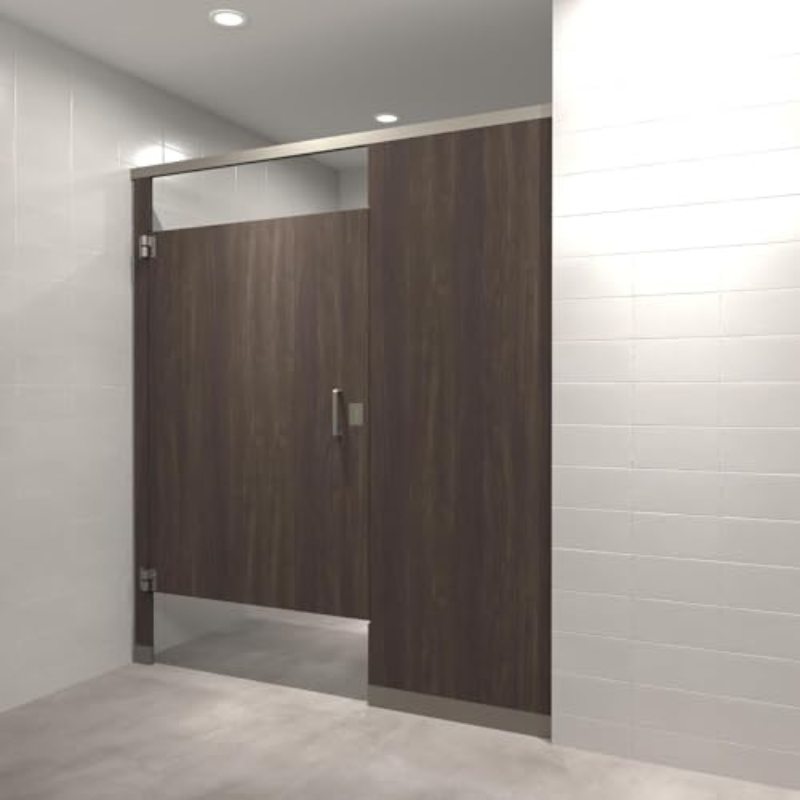
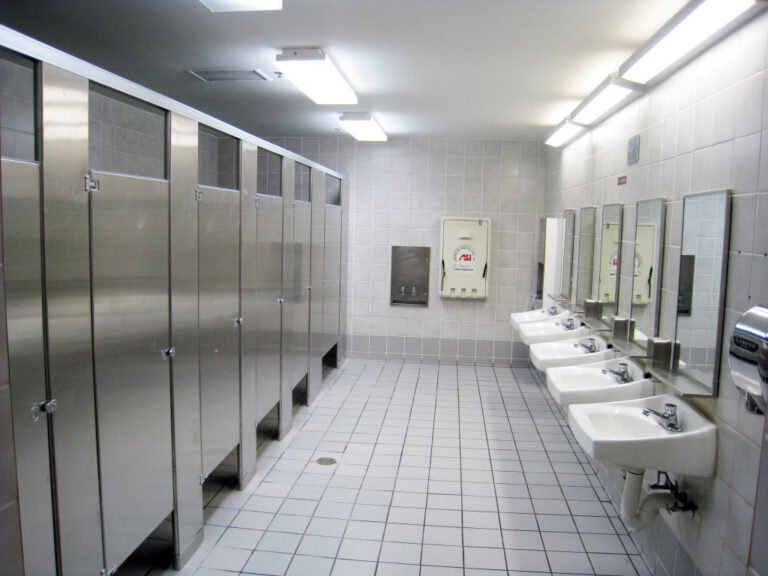
| Toilet partitions | One ADA stall with required clearances | Durable materials (phenolic, HDPE, stainless steel) with hardware a person with limited grip can operate |
| Mirrors | One mirror at compliant height | Mirrors positioned so seated users actually see themselves |
| Dispensers and dryers | Within reach ranges | Touchless operation, mounted where a wheelchair user can reach without stretching |
| Grab bars | Present at the ADA stall | Properly load-rated, with backing planned before the wall closes up |
| Changing stations | Often absent entirely | Baby changing stations in all restrooms; adult changing stations where occupancy calls for them |
The difference between the two columns is rarely a big line item. It’s mostly decisions made early — which is exactly why the report urges owners and architects to treat accessibility as planning, not product selection at the end.
Changing stations: the most common gap we see
Baby changing stations are the quickest win on this list. They’re inexpensive, they mount to a wall, and parents notice when they’re missing. Mavi New York stocks commercial baby changing stations from ASI, Koala Kare, and Bradley — including the ASI 9013, a stainless steel unit rated for 400 pounds with one-handed operation, and compact vertical models for tight restrooms.
Adult changing stations are a bigger planning decision. A proper universal changing room needs dedicated floor area, an accessible route, a height-adjustable table rated for at least 400 pounds, plus the supporting accessories — soap and towel dispensers, hooks, a waste receptacle, and signage. If your project is an assembly space, a school, a transit facility, or a healthcare building, raise the question during design, not after the walls are framed.
Why ASI products, and why order them locally
ASI is one of the few manufacturers that makes the whole washroom — toilet partitions through ASI Global and ASI Accurate, washroom accessories through American Specialties, plus lockers and visual display products. The lines in the report, like the Alpaco phenolic partitions, the recessed Piatto collection, and the Velare mirrored cabinet systems, are designed to work together, which matters when you’re trying to hit both a design standard and an accessibility standard in one room.
Mavi New York is an authorized distributor of the full ASI Group product line — partitions in phenolic, solid plastic, powder-coated steel, and stainless steel, along with grab bars, dispensers, hand dryers, mirrors, and changing stations. We supply material across the Northeast and install throughout the New York metro area, New Jersey, and Connecticut. For NYC projects on a deadline, same-day pickup is available on stocked items.
Because we work with these products daily, we can also flag the practical stuff the catalog won’t: which partition hardware is easiest to operate with limited dexterity, where grab bar backing needs to go, and which accessories are actually in stock when your schedule is tight.
What this means for your project
If you’re planning a restroom renovation or a new build anywhere in the tri-state area, do three things. First, ask your architect which code cycle applies and whether changing station requirements are triggered. Second, walk your existing restrooms with fresh eyes — or ask someone who uses a wheelchair to. Third, get pricing on the accessible options early, because the cost difference is smallest when it’s designed in from the start.
What NY Buildings Should Know About Accessible Restroom Design: frequently asked questions
No — the federal ADA Standards currently have no adult changing table requirement. But the 2024 International Building Code and several state laws now require them in certain building types, so check which code applies to your project.
Baby changing stations are wall-mounted folding tables typically rated under 200 pounds. Adult (universal) changing stations support at least 400 pounds, adjust in height, and require a dedicated accessible room with supporting accessories.
ASI partitions can be configured as accessible stalls in any material — phenolic, solid plastic (HDPE), powder-coated steel, or stainless steel. Compliance depends on the layout and hardware, which is set during the quote and shop drawing stage.
Mavi New York supplies and installs toilet partitions, grab bars, changing stations, and other Division 10 products throughout the NYC metro area, New Jersey, and Connecticut, and ships material across the Northeast.
Start with your architect or a code consultant for the legal requirements, then review the ASI Accessibility Gap Report’s recommendations for going beyond minimums. For product selection and pricing, a distributor can quote compliant options from your drawings.
Get a free quote on ASI products in New York
If you’re pricing toilet partitions, changing stations, grab bars, or any other Division 10 products from ASI for a project in New York or the tri-state area, Mavi New York can quote it from your drawings — free. Call 718-874-3805 or email info@mavinewyork.com and tell us about your project.